
Construction Materials Testing – Soil
We provide a range of soil testing services in both the field and in our laboratories to help assess soil characteristics, support project design, and document compaction. Our most common soil tests include:
Grain Size Analysis
Grain size analysis helps determine the distribution of soil particle sizes, which influences how soils will behave in construction applications. The soil is passed through a series of sieves to separate particles by size.
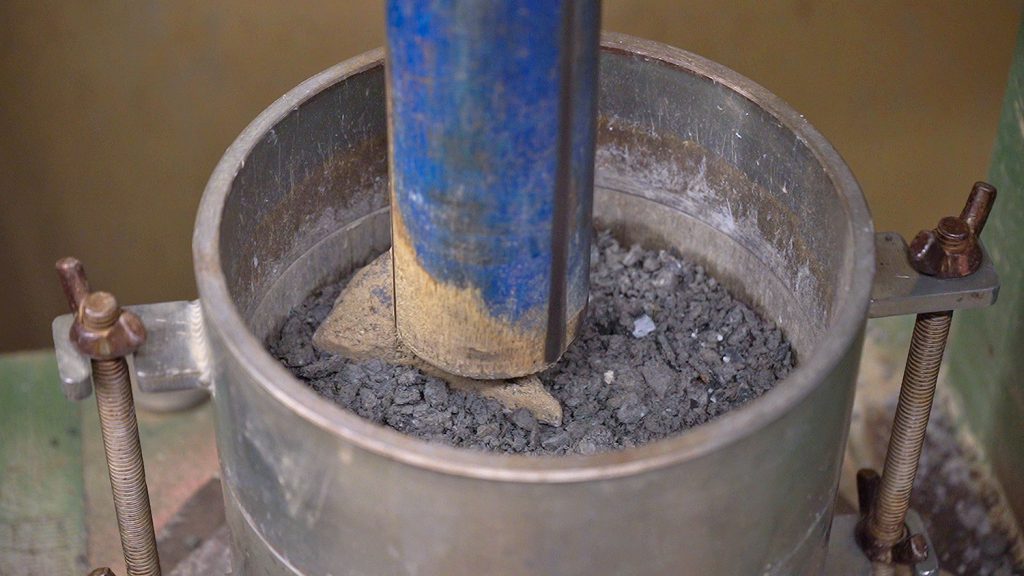
Moisture–Density Relationship (Proctor Test)
The Proctor test helps establish a soil’s maximum density at an optimum moisture content. To perform this test, soil is compacted in a mold at various moisture contents. The resulting data provides reference values used during field compaction work. These laboratory‑developed values help field technicians determine the percentage of compaction achieved during construction.
Field Density Testing
Field density testing uses the Moisture–Density Relationship (Proctor) test results to measure how well soil has been compacted in place. Technicians use a nuclear density gauge to measure in‑place density and moisture content and compare the results to laboratory reference values to calculate percent compaction.
Frequently Asked Questions
A laboratory Moisture–Density Relationship (Proctor) test should be completed before field compaction testing can occur. The Proctor test establishes the soil’s maximum density and optimum moisture content. These values are then used in a nuclear density gauge to determine the percent compaction in the field.
Compaction testing measures how well placed fill has been compacted relative to laboratory standards. Bearing capacity relates to how much load the soil can support and is evaluated by geotechnical engineers as part of an engineering analysis.