
Construction Materials Testing – Concrete
Our team provides field and laboratory concrete testing services to help verify that materials meet project specifications. We collect and test concrete during placement and prepare laboratory samples for strength testing at scheduled intervals.
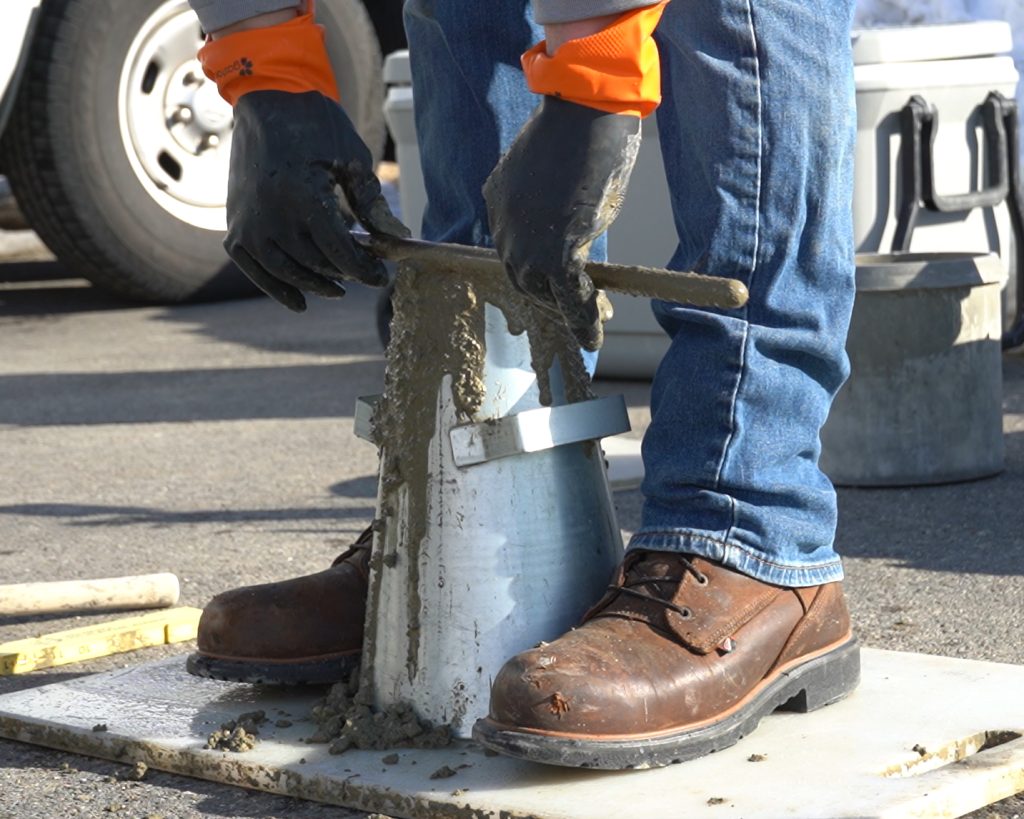
Field Concrete Testing
Slump Testing
Slump testing helps measure the consistency of fresh concrete. Technicians fill a slump cone with concrete, lift the cone, and measure how much the concrete subsides. This measurement can indicate variations in water content or mix behavior.
Air Content Testing
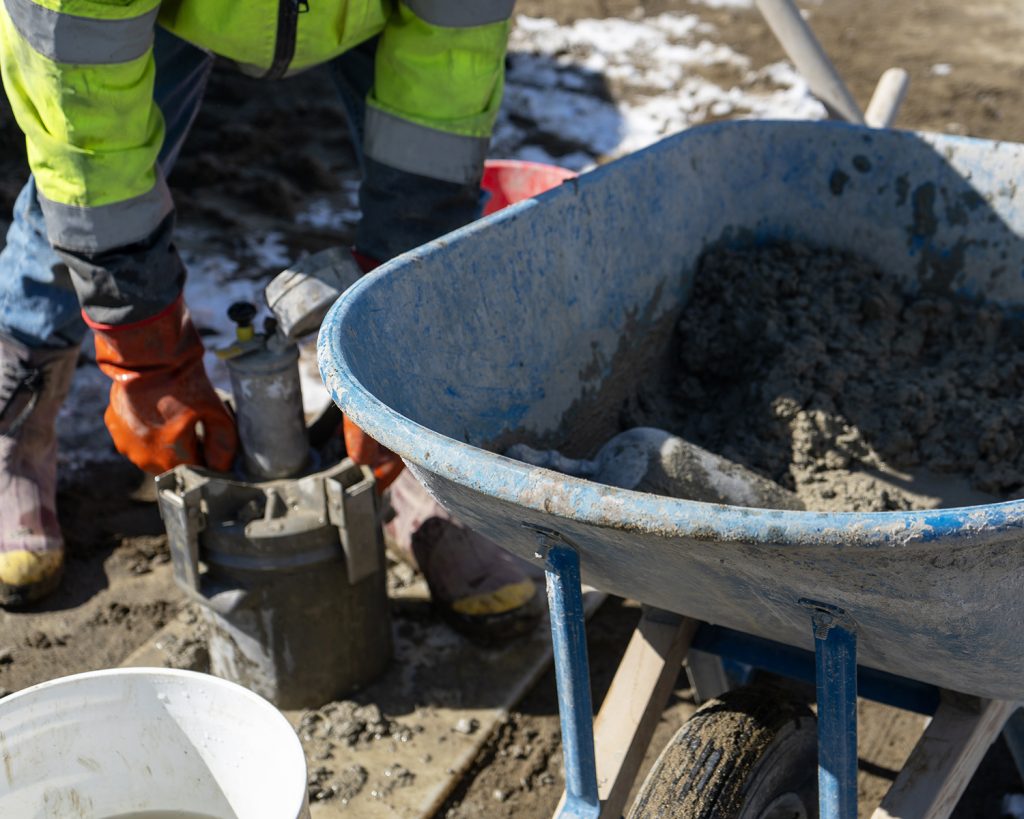
Air‑entrained concrete incorporates a system of microscopic air voids that relieve internal pressure by accommodating the expansion of water during freezing conditions.
Field air content testing helps confirm that the entrained air content meets project specifications.
- Exterior concrete commonly requires 5%–9% air.
- Interior concrete typically requires 1%–3% air.
Temperature Testing
We measure the temperature of fresh concrete using a probe thermometer. Temperature directly affects hydration.
Laboratory Concrete Testing
Compressive Strength Testing
Fresh concrete is collected on site and cast into cylinder molds. After initial curing, specimens are transported to our laboratory, stored at 100% humidity, and maintained at a regulated temperature until they reach the specified test age—commonly 7 days and 28 days.
On the testing day, cylinders are placed in a compression machine to measure maximum load and calculate compressive strength. Fracture patterns are also recorded for additional insight.
Concrete is typically designed to reach its specified compressive strength at approximately 28 days, though some mixes with a high percentage of secondary cementitious products may develop strength more gradually.
Frequently Asked Questions
Slump testing helps confirm that the concrete consistency is within the project’s acceptable range. Higher slump measurements may indicate that there is too much water in the mix, which can create issues with strength and aggregate segregation. Low slump values may lead to consolidation issues and voids in the finished concrete.
We test the entrained air content to measure whether the sample falls within the project’s specified range. Appropriate air content supports durability, freeze‑thaw resistance, and workability. Higher‑than‑intended air content can reduce overall compressive strength and increase porosity.
Temperature influences the rate of chemical reactions during hydration. High temperatures can accelerate set times, while low temperatures can slow curing and reduce strength.
Technicians require a safe, accessible area away from equipment traffic to set up testing materials and prepare concrete samples.
For field concrete testing, we require the approved concrete mix design information for each mix being placed, the concrete supplier’s batch tickets for each load delivered, and basic placement details including pour location and approximate quantity. This information allows our technicians to properly sample, test, and document the concrete in accordance with the project specifications.